careers
contact
Advanced Precision CNC Machining Services
Kiski Precision operates a 30+ machine Pittsburgh, PA facility offering full-service CNC and manual machining from prototypes to high-volume runs. Backed by 27 machinists with 300+ combined years of experience, they handle diverse metals and plastics, hold tolerances as tight as 0.0003” on select precision work, and provide complete in-house welding, CMM inspection, electro-mechanical assembly, wiring, and heat-treating up to 2,200°F.
Precision CNC Machining Capabilities at Kiski Precision
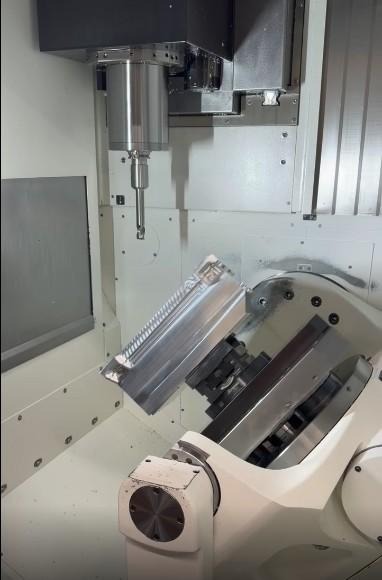
Kiski Precision runs a full machining operation out of our Pittsburgh, PA facility. CNC and manual. Vertical and horizontal. Simple parts and complex multi-axis work. We machine what you need, from one-off prototypes to production runs, and we do it with the kind of accuracy that keeps customers coming back for years.
Our shop floor has over 30 CNC and manual machines, including 5-axis, 4th-axis, horizontal machining centers with pallet systems, and CNC lathes with live tooling. We work with carbon steel, tool steel, stainless steel, aluminum, titanium, Inconel, and other nickel alloys, copper, non-ferrous metals, and plastics. If you have a material question, call us.
We have 27 machinists with over 300 combined years of experience, and we will tell you if we can do what you need.
CNC Machining Capabilities
We run Mazak and Haas equipment across the shop. The machines are current, well-maintained, and set up for the kind of work that requires holding tight tolerances over long runs without drift.
Vertical Machining Centers
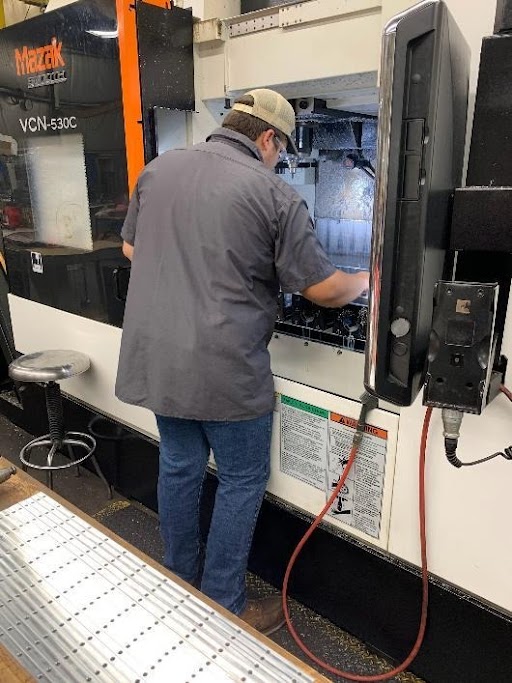
Our vertical lineup includes a Mazak Variaxis C-600 with full 5-axis capability and a 2-pallet changer for complex geometry work without refixturing. Behind that, we run six Mazak VCN 530C and 510C verticals with table travels up to 20″ x 50″ and spindle speeds to 15,000 RPM, all with 4th-axis capability. We also run Haas verticals ranging from the VF-9/50 (84″ x 40″ x 36″ travels) down to a Mini VMC for smaller precision work. One of our Haas VF-2SS machines runs with a collaborative cobot loader system for lights-out or extended-run production.
Horizontal Machining Centers
The horizontal side is where we handle larger, heavier, and more complex parts. Our Mazak Nexus 8800-II has 55″ x 47″ x 52″ travels, 50 HP, 1,000 PSI through-spindle coolant, and a 120-tool capacity. That machine runs parts that most shops would turn away. We also run a Mazak FH-680 and HCN 4000 horizontals, plus two Mazak HTC-400s for mid-size horizontal work. For higher throughput, our Haas EC-400 runs a 7-pallet system with 15,000 RPM spindle and 100-tool capacity. On top of that, we have access to two Mazak HCN 5000/50 horizontal centers running 14 pallets each, 28 pallets total, with 120-tool capacity and Smooth G controls.
CNC Lathes and Mill/Turn Equipment
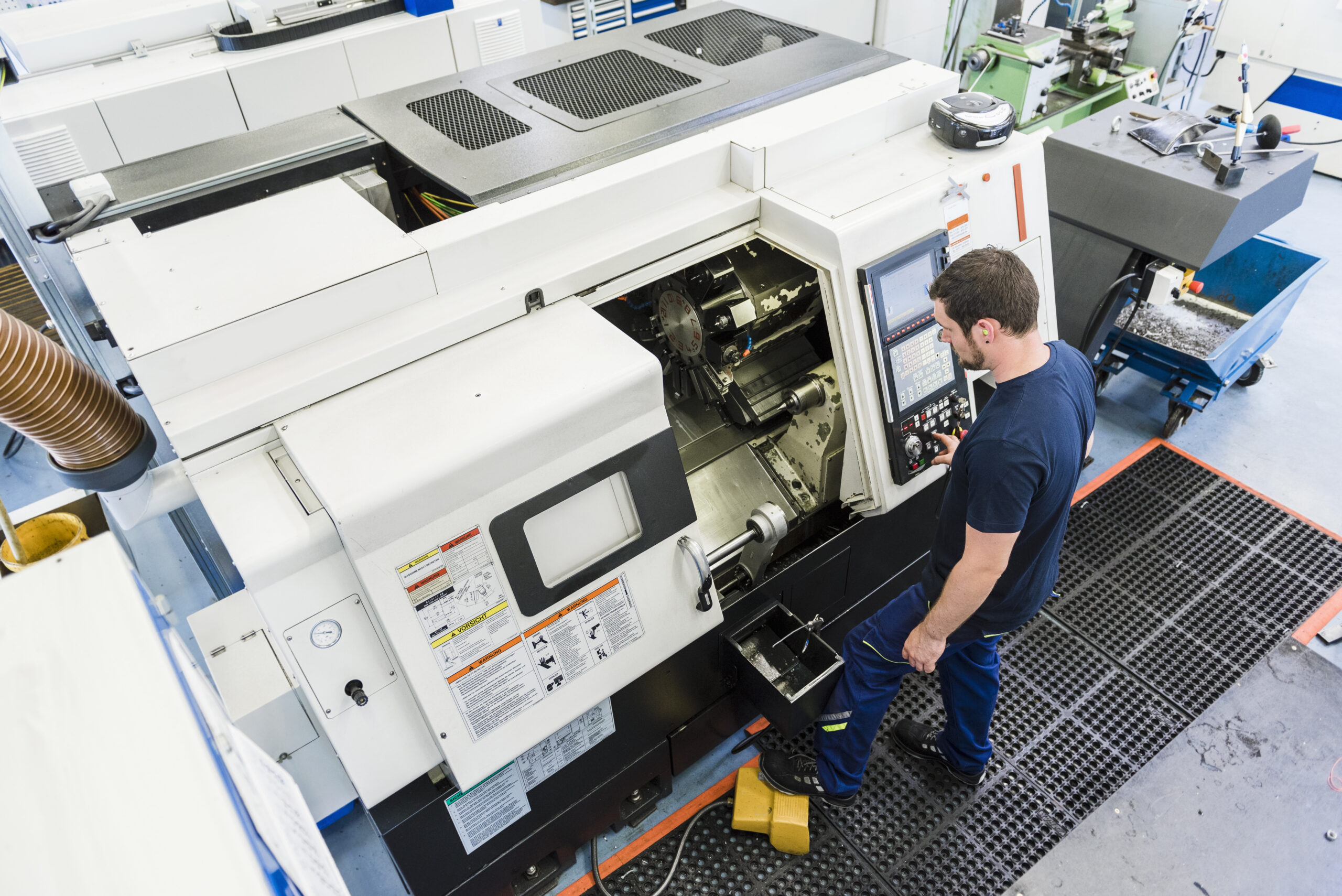
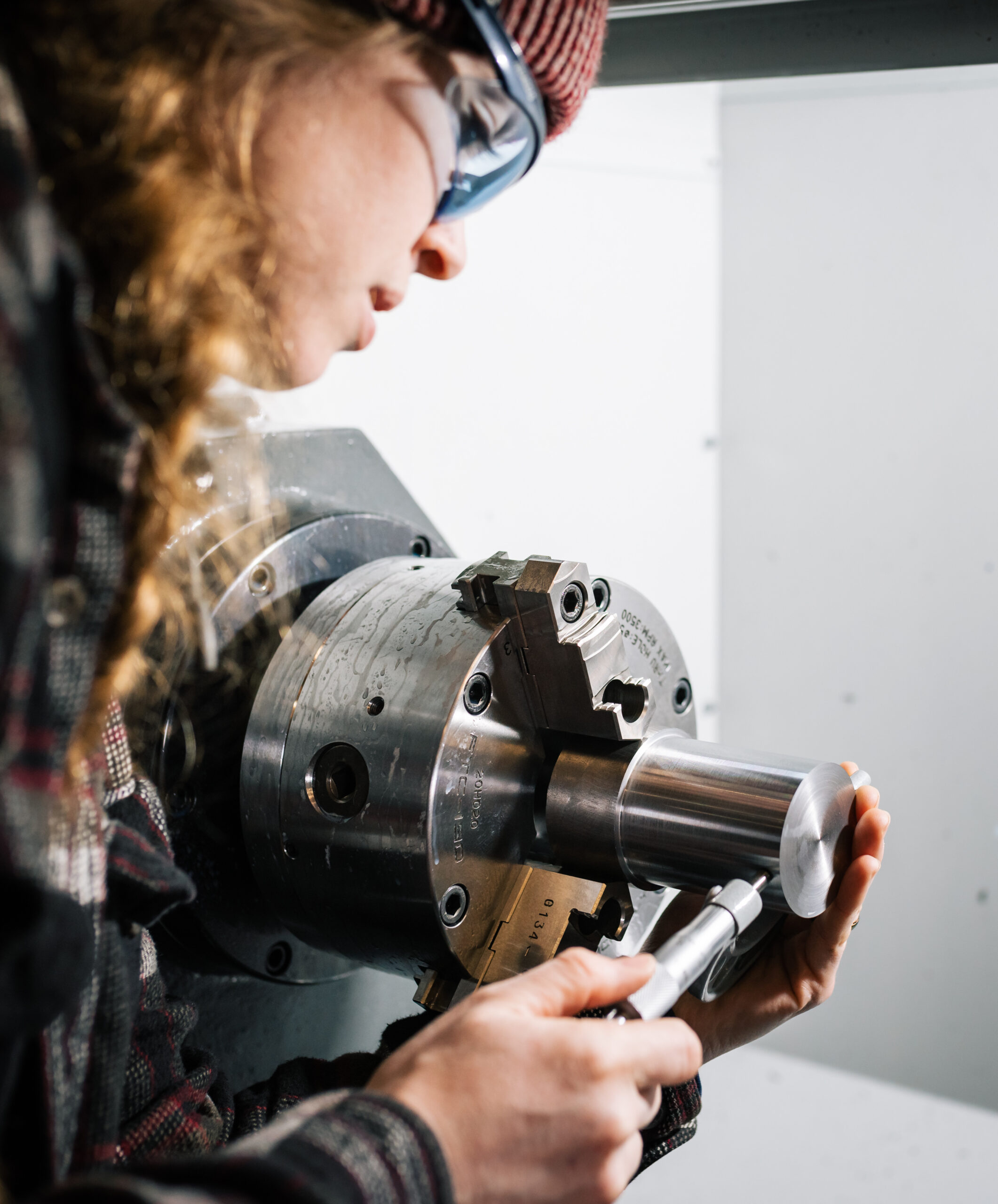
We run CNC lathes from Haas, Mazak, and Okuma, including a Haas DS-30 SSY dual-spindle lathe with live tooling and Y-axis capability for complex turned parts that would otherwise require multiple setups. Our mill/turn lineup includes four Mazak Integrex machines, from the i-200S up to the i-630V/6 with full 5-axis milling and 41″ turning capability. These machines let us combine turning and milling operations in a single setup, which reduces handling, improves accuracy, and shortens lead times.
Manual Machining Capabilities
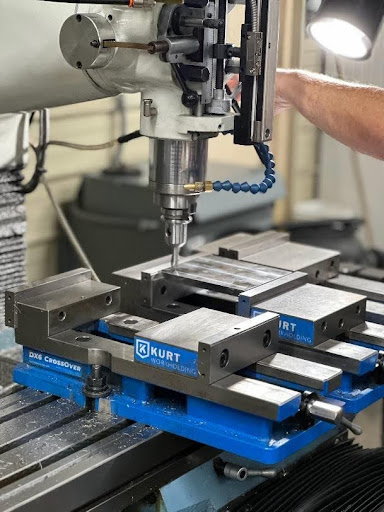
CNC does most of the heavy lifting, but we keep a well-equipped manual shop for the work that calls for it. We run Sharp and Bridgeport mills (several with Prototrak retrofits for 2-axis CNC positioning), a Trak bed mill with 3-axis CNC control, manual lathes from Sharp and Summit, and two horizontal boring mills including a rebuilt Giddings & Lewis 5″ with a 12-foot table and Lucas air-lift rotary table. That boring mill handles oversized work that won’t fit on a standard CNC table.
Manual machining gives us flexibility for short-run jobs, one-off repairs, and secondary operations that don’t justify a full CNC setup. It also means we can respond fast when a customer needs something turned around in hours, not days.
Precision CNC Machining vs Manual Machining: Cost-Benefit
The question of CNC versus manual machining comes down to the job itself. Neither is universally better. The right choice depends on the part geometry, tolerance requirements, material, volume, and timeline.
CNC machining is the stronger choice when you need repeatable accuracy across a production run, complex 3D geometry that requires simultaneous multi-axis movement, or tight tolerances that have to hold from the first part to the last. CNC also wins on throughput for anything above a handful of parts because the machine runs the same program every cycle without variation. With pallet systems and cobot loaders, we can extend unattended run time and reduce cost per part even further.
Manual machining makes more economic sense for simple geometries on short runs, secondary operations like deburring or chamfering, and one-off jobs where the time spent programming and fixturing a CNC would cost more than just making the part by hand. It is also the faster path for emergency work when a customer calls and needs a part the same day.
We run both under one roof, which means we can route your job to whichever method gives you the best combination of quality, speed, and cost. You are not paying for CNC setup time on a job that should be manual, and you are not accepting manual tolerances on a part that needs CNC precision.
Materials We Machine
Material Category |
Details |
Carbon Steel |
Standard grades for general machining, structural components, machine bases, and fixtures. |
Tool Steel |
Hardened and pre-hardened tool steels for dies, tooling, and wear-resistant components. |
Stainless Steel |
300 and 400 series for corrosion-resistant applications across medical, energy, and industrial sectors. |
Aluminum |
6061, 7075, and other alloys for aerospace, defense, and lightweight structural components. |
Titanium |
Aerospace and medical grade titanium requiring controlled feeds, speeds, and thermal management. |
Nickel Alloys |
Inconel and other nickel-based superalloys for high-temperature and corrosion-resistant applications. |
Copper & Non-Ferrous |
Copper, brass, bronze, and other non-ferrous metals for electrical, thermal, and specialty applications. |
Plastics |
Engineering plastics including Delrin, UHMW, PEEK, and nylon for insulators, bushings, and custom components. |
Supporting Services Under One Roof
Machining is often just one step in a larger build. What separates Kiski from a typical machine shop is that we can take a project through multiple manufacturing stages without shipping parts somewhere else between each one.
Welding & Fabrication
TIG, MIG, and stick welding for steel, stainless, aluminum, and cast products. Our welders work alongside the machining team, so when a part needs welding before or after machining, it stays in our facility. This is the backbone of our machine base and enclosure work.
Quality & Inspection
Every machined part goes through our in-house quality lab. We run a Zeiss O-Inspect 322 CMM with vision and touch probe capability, a Faro Edge 7-axis portable CMM with 9-foot reach for larger assemblies, a Brown & Sharpe Reflex 343 CMM, laser interferometer, optical comparators, and a full complement of manual inspection tools. We inspect during production, not just at the end, so problems get caught early.
In-House Heat Treating
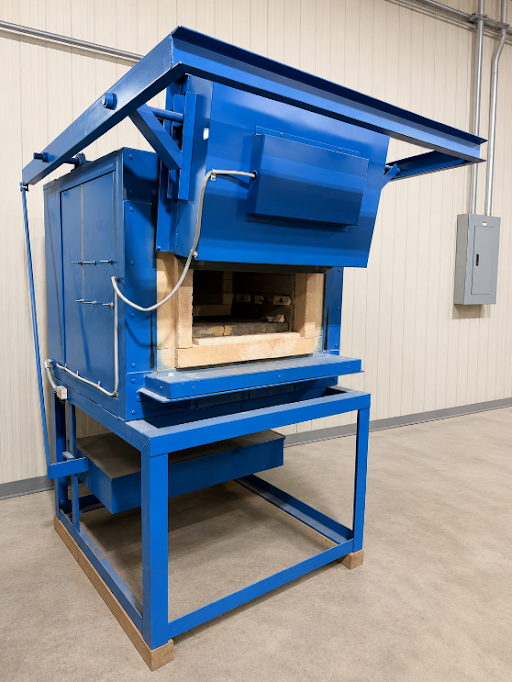
We run six heat treat furnaces in-house with internal temperatures up to 2,200°F and capacity up to 10″ x 18″ x 19″. For parts that require stress relief, hardening, or tempering as part of the machining process, we handle it here. No waiting on outside vendors. No additional shipping. It gets done and comes right back to the machine.
Key Industries and Applications
Our machining work spans aerospace and defense, energy and technology, industrial manufacturing, medical and life sciences, and tool and die. We hold tolerances for motion control applications, machine-critical components for defense programs, and produce production tooling that has to perform for years. The common thread is precision. If the part matters, if the tolerances are tight, if the application is demanding, that is the work we want.
Some examples of work that we do:
- We machine 300-400 carriages for motion control systems that hold flatness and parallelism tolerances of 0.0003” on our CNC machines without the need for grinding
- Hold true position tolerances of 0.002” over 150pc runs for military applications
- Hold profile callouts of 0.003” over 50” for aerospace projects
FAQs
What services do you offer?
CNC and manual machining, welding and fabrication (TIG, MIG, stick), electromechanical assembly, wiring and cable harnesses, surface grinding, and in-house CMM inspection and testing.
We also design and build welded machine bases and custom enclosures. Most of our competitors offer one or two of these. We do all of them under one roof.
What materials do you work with?
Carbon steel, tool steel, stainless steel, aluminum, titanium, Inconel, and other nickel alloys, copper, non-ferrous metals, and plastics. If you have a material question on something unusual, call us, and we will tell you if we can work with it.
What is your typical lead time?
It depends on the scope of the project, the materials involved, and our current capacity. Simple machined parts can turn around quickly. Full electromechanical assemblies take longer because of component sourcing, assembly, wiring, and testing.
We will give you a realistic timeline when we quote the job, and we are transparent if anything changes along the way.
Is there a minimum order size?
No strict minimum. We make one of something for the first time everyday. If you have a project that fits our capabilities, we want to hear about it regardless of size. A small first project is often how long-term partnerships start.
Do you handle prototypes or just production runs?
Both. We regularly do prototype and low-volume work alongside full production runs. Some customers come to us with a prototype and then move into production once the design is proven.
Others need five parts. Others need five hundred. We are set up to handle the full range.
Ready to Talk About Your Machining Project?
Send us your drawings or tell us what you need. We will review it, give you an honest answer on whether we are the right fit, and get you a quote. Simple machining jobs can be quoted in hours. Complex projects may take a few days so we can get the number right.
