careers
contact
Welding & Fabrication
Processes and Materials
The process for each job is chosen for the material, the joint design and how the finished part will be used. Carbon steel, several grades of stainless steel, aluminum and Inconel are all regular work, and the shop uses fume extraction when welding stainless. At the heavy end, the team welds steel up to about 3 inches thick and aluminum from 1.5 to 2 inches thick, which is work many shops prefer to avoid. At the light end, it has welded tubing with walls of 0.020 to 0.030 inch and aluminum as thin as 0.060 inch, so a single supplier can cover both ends of a product line.
Thick sections and castings need careful heat control, because different materials can crack if they are heated or cooled too quickly. Heavy steel is preheated to between 300 and 400°F before welding begins, and parts are wrapped in fire blankets or post-heated so that they cool slowly. Aluminum castings receive the same attention to preheat and post-heat. The work in the shop can change from one day to the next, and the welders are used to moving between heavy structural steel and light aluminum as the schedule requires.
Size and Capacity
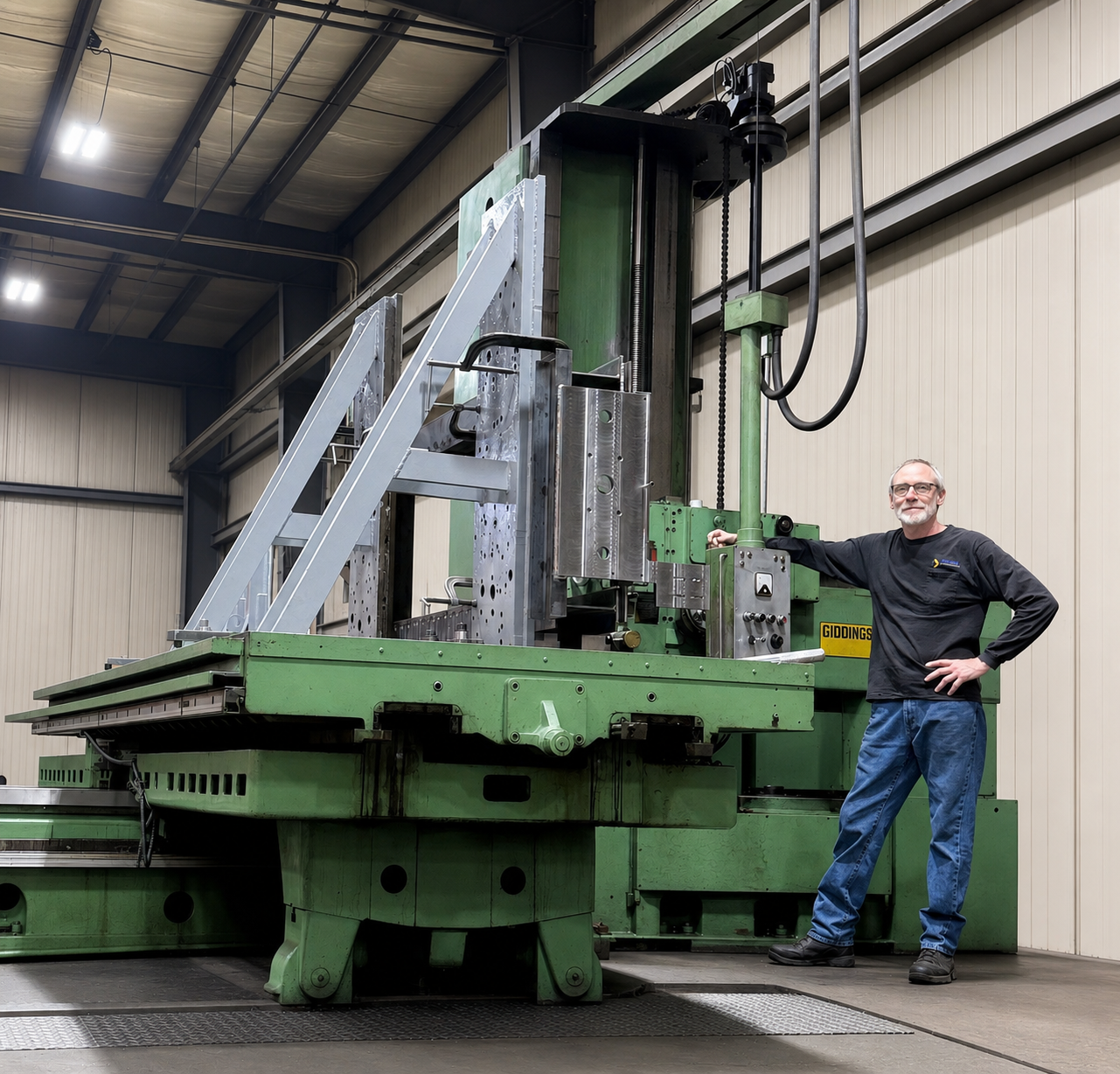
The shop is most comfortable with weldments up to about 18 feet long, 10 feet wide and 10,000 pounds. A 10-ton overhead crane handles lifting, and recent jobs include trailers 18 feet long and tube arrays of roughly 5,600 pounds and 15 feet in length. Parts at the upper end of that range take several people to move, flip and position safely, which Kiski accounts for when it quotes the work. Above that range, handling costs rise quickly, and a shop set up for larger fabrication is usually the better value for the customer.
Welders and Qualifications
Five welders work on the floor, and part-time welders join the team when a larger job calls for more hands. Together they bring more than 60 years of welding experience, and one welder alone has more than 20 years in the trade. The shop works to AWS standard welding procedure specifications for flux core (AWS B2.1-1-234) and TIG (AWS B2.1-8-212). It holds welder qualifications to AWS D1.2 for structural aluminum and to the flux core procedure.
Customers in defense, medical and other regulated industries often specify a welding procedure or qualification for their parts. When a project requires one that the shop does not already hold, Kiski will qualify its welders to it, as it has done in the past, provided the size of the project justifies the cost. Qualification coupons and sample welds can also be supplied when a customer wants to evaluate the shop’s work before committing to a larger order.
Stress Relief
Welding puts heat and stress into a structure, and more joints and more weld deposit mean more of both. When that stress could affect the final tolerance of a part, such as a machine base, the drawing usually calls for stress relief so that the weldment stays stable over time and through changes in temperature. A weldment that will be buried in the ground may not need it, which is why the decision follows the drawing and the application. Kiski sends stress relief to two local heat treaters whose furnaces can take anything the shop can build, with a typical turnaround of about one week.
Fixing Welds That Failed Elsewhere
Customers sometimes bring Kiski work that failed at another shop. The most common cause is cold lap, which happens when the welder concentrates heat on one side of the joint and the weld fuses to only that side. A cold lap can look acceptable, particularly under paint, although the weld is holding on to only half of the joint. Visual inspection by someone who knows what to look for will find it, and dye penetrant testing is another reliable check, but the best prevention is an experienced welder who sets the machine correctly from the start.
Drawing Review Before the Weld
The welders and estimators read each drawing with the finished part in mind, and they call the customer when something does not look right. Common issues include missing or unclear weld symbols, parts drawn size-on-size so that they cannot fit together, and bolted assemblies dimensioned from the body rather than from hole to hole. When a customer explains where a weldment is going and what it attaches to, the shop can plan its fixturing around that information. This matters because every weld moves the part slightly, and parts built separately still need to bolt together correctly when they reach the customer.
Kiski has also worked with an outside engineering firm to show how small design changes reduce the cost of a weldment. That firm’s machine base design relied on butt welds, which would have required every joint to be prepped beforehand and ground smooth afterward. Using larger caps to create natural fillet joints removes that preparation and much of the grinding, so the finished base serves the same purpose at a lower cost. The firm now builds these practices into the designs it prepares for its own customers.
A Weldment Other Shops Would Not Take
A university research group needed a stainless steel weldment for an optical application. The structure was built from bent pipe and plates set on several different planes, and the distances between those planes had to be held within a couple of tenths. Kiski was asked to perform the job but declined at first because of work load and how difficult the job would be. The customer tried to get several other local shops to take on the job. When all other shops declined, they sent the job to a shop in California that could not hold the tolerances. The customer then returned to Kiski after the shop had initially declined the work. Because stainless steel moves a great deal under the heat of welding, the team built jigs, welded them to the table and fixtured each stage of the build, drawing on the combined experience of several people in the shop. The customer visited during the work and told the team afterward that no one else would have taken the job on.
Work We Refer Out
Kiski operates as a general job shop, and it is direct with customers about the work it does not take. The shop does not weld beryllium or other materials that give off toxic fumes, and it avoids heavily galvanized material for the same reason. Plastic welding and micro welding, such as the thin-wall tubing work common in medical devices, go to specialists who do that work every day and will deliver a better part. ASME pressure vessel code work is referred to shops in the region that hold those codes, because the cost of acquiring a code is difficult to justify for a single project.
FAQs
What welding processes and materials does Kiski Precision work with?
Kiski welds using TIG, MIG, flux core and stick processes. Regular materials include carbon steel, several grades of stainless steel, aluminum, aluminum castings and Inconel. The process for each job is chosen based on the material, the joint design and the part’s end use.
Are your welders certified?
Kiski works to AWS standard welding procedure specifications for flux core (B2.1-1-234) and TIG (B2.1-8-212), and holds welder qualifications to AWS D1.2 for structural aluminum and to the flux core procedure. When a project requires a different procedure or qualification, Kiski will qualify its welders to it if the project justifies the cost. The shop has done this for customers in the past.
What is the largest weldment you can build?
The shop is most comfortable with weldments up to about 18 feet long, 10 feet wide and 10,000 pounds, with a 10-ton overhead crane for lifting. Recent work includes 18-foot trailers and tube arrays of roughly 5,600 pounds. Larger work is usually more cost-effective at a shop built for that scale.
How thick or thin can you weld?
The team has welded steel up to about 3 inches thick and aluminum from 1.5 to 2 inches thick, using preheat and controlled cooling to prevent cracking. At the thin end, it has welded tubing with 0.020 to 0.030 inch walls and aluminum as thin as 0.060 inch.
Do you provide stress relief for weldments?
Yes. Kiski sends stress relief to two local heat treaters whose furnaces can handle anything the shop can build, with a typical turnaround of about one week. Stress relief is usually specified on the drawing when residual stress could affect the final tolerance, as it often does on machine bases.
What welding work do you not take on?
Kiski does not weld beryllium or other materials that produce toxic fumes, and it refers plastic welding, micro welding and ASME pressure vessel code work to specialists. Work larger than about 18 by 10 feet or 10,000 pounds is usually better suited to a larger shop, and Kiski will point customers toward shops that can help.
